IAS and ASSA host University of Georgia Religious Studies Don to a Guest Lecture
Written By
Editor
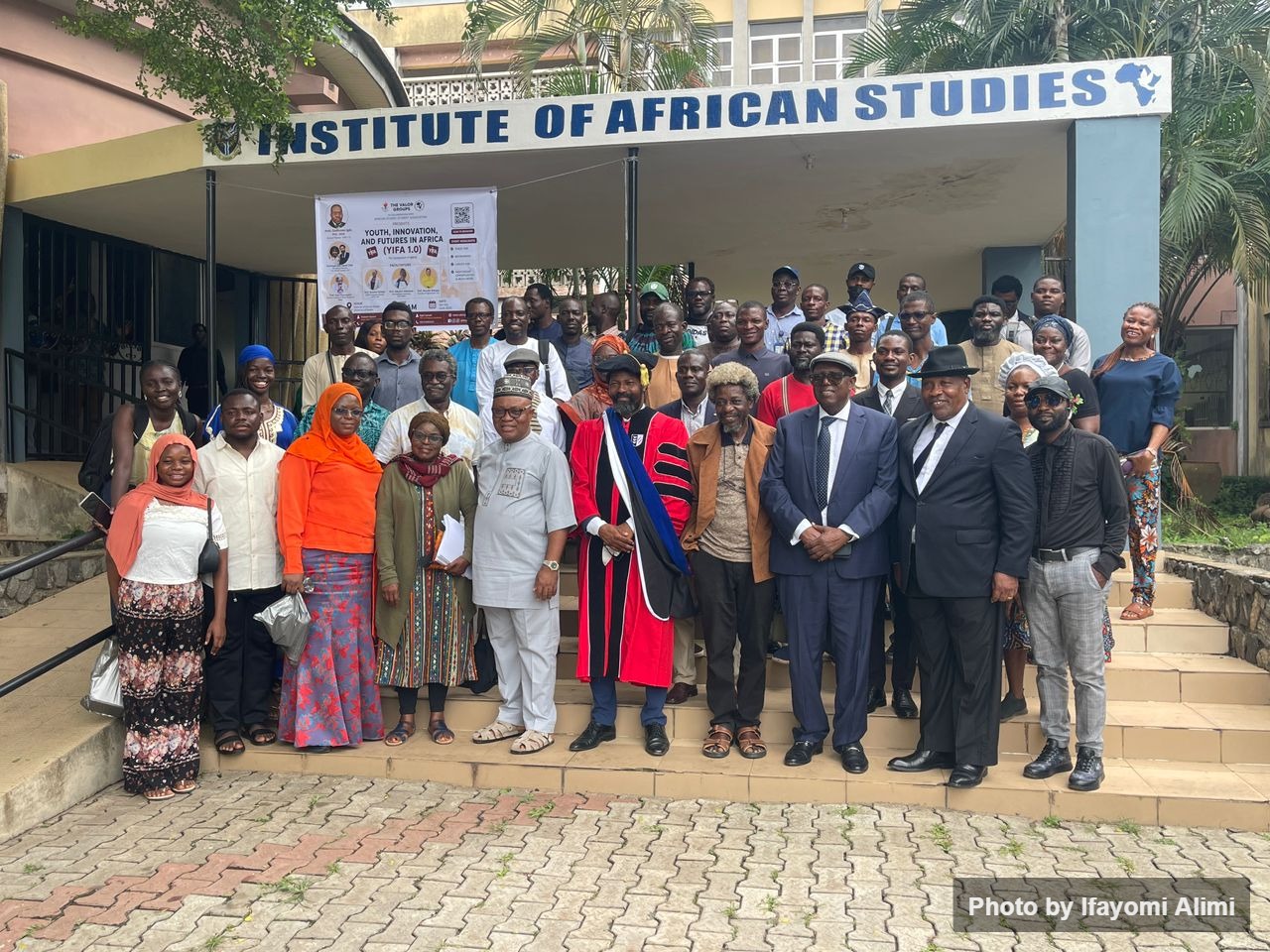
Photo: Photo: Ifayomi Alimi
“Scripture is not a class of [esoteric] objects. It is a class of relationships between communities and the discursive functions through which they understand themselves,” Dr. Olali said.
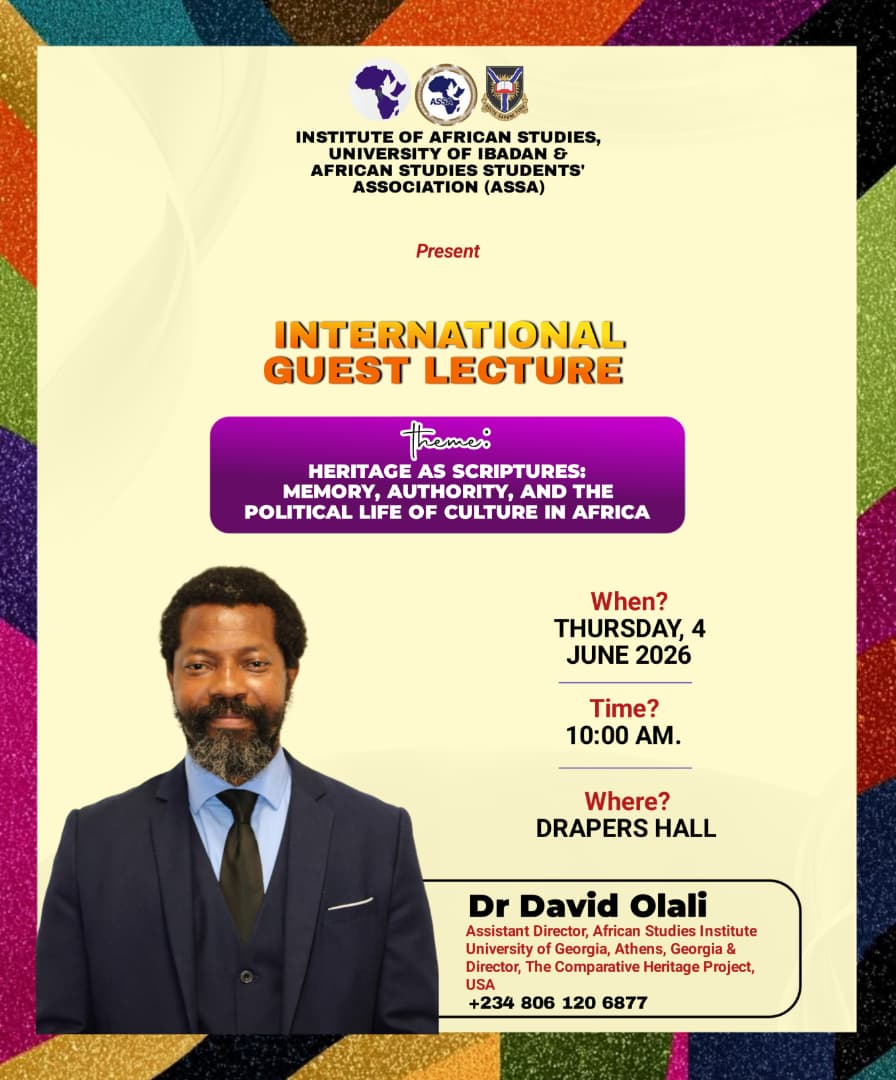
On Thursday 4th June 2026, the Institute of African Studies in collaboration with the African Studies Students’ Association (ASSA) hosted a guest lecture at the institute, in furtherance of its perpetual commitment to advancing conversations on African heritage and decolonial perspectives.
Held at the prestigious Drapers hall, the lecture was titled “Heritage as Scriptures: Memory, Authority, and the Political Life of Culture in Africa”.
The guest lecturer, Dr. David Olali, is a lecturer in Religious Studies and the assistant director of the African Studies Institute at the University of Georgia, USA. Dr. Olali is also the director of The Comparative Heritage Project, USA.
In line with his ongoing work which explores critical thinking about the histories of belief and how these shape the understanding of meaning, Dr. Olali invited the audience to ruminate on questions of epistemic violence, unequal power relations, and the whitening of memory in Africa’s ontological history.
Introducing his Comparative Complex Theory (CCT) — a framework for understanding decolonial perspectives on global heritage and scriptural politics, and the place of colonised peoples in today’s world — Dr. Olali deconstructed the concept and notion of scripture, urging the audience to think of scripture as an idea that exists beyond religious texts.
“Scripture is not a class of [esoteric] objects. It is a class of relationships between communities and the discursive functions through which they understand themselves,” Dr. Olali said.
“Every human community has produced something that functions as scripture.”
African heritage, Dr. Olali affirmed, is scripture.
Scripturalisation, according to Dr. Olali, is “the entire sociopolitical process by which certain forms of discourse — textual, oral, gestural, performative, material — are invested with community-constituting, ontologically-grounding significance.” For Africans, the root of the difficulty with viewing and thinking of their heritage as scripture lies with the continent’s history of colonially-enacted epistemic violence — the deliberate dismantling of the mechanisms through which African communities could authorise themselves.
“The question,” the religious studies academic said, “is never whether a people have scripture, but rather whose scripturalisation is given legitimacy and by what mechanism this (de)ligitimacy is enacted.”
A post-presentation comment was delivered by IAS faculty member Dr. Obafemi Jegede, followed by contributions and questions from the audience.
In closing the lecture, IAS resident scholar Dr. Tunde Adegbola emphasised the importance of understanding the etymology of the words ‘scripture’ and ‘script’, and how it is all connected to the orality and consequent textuality that undergirds African cultural heritage.
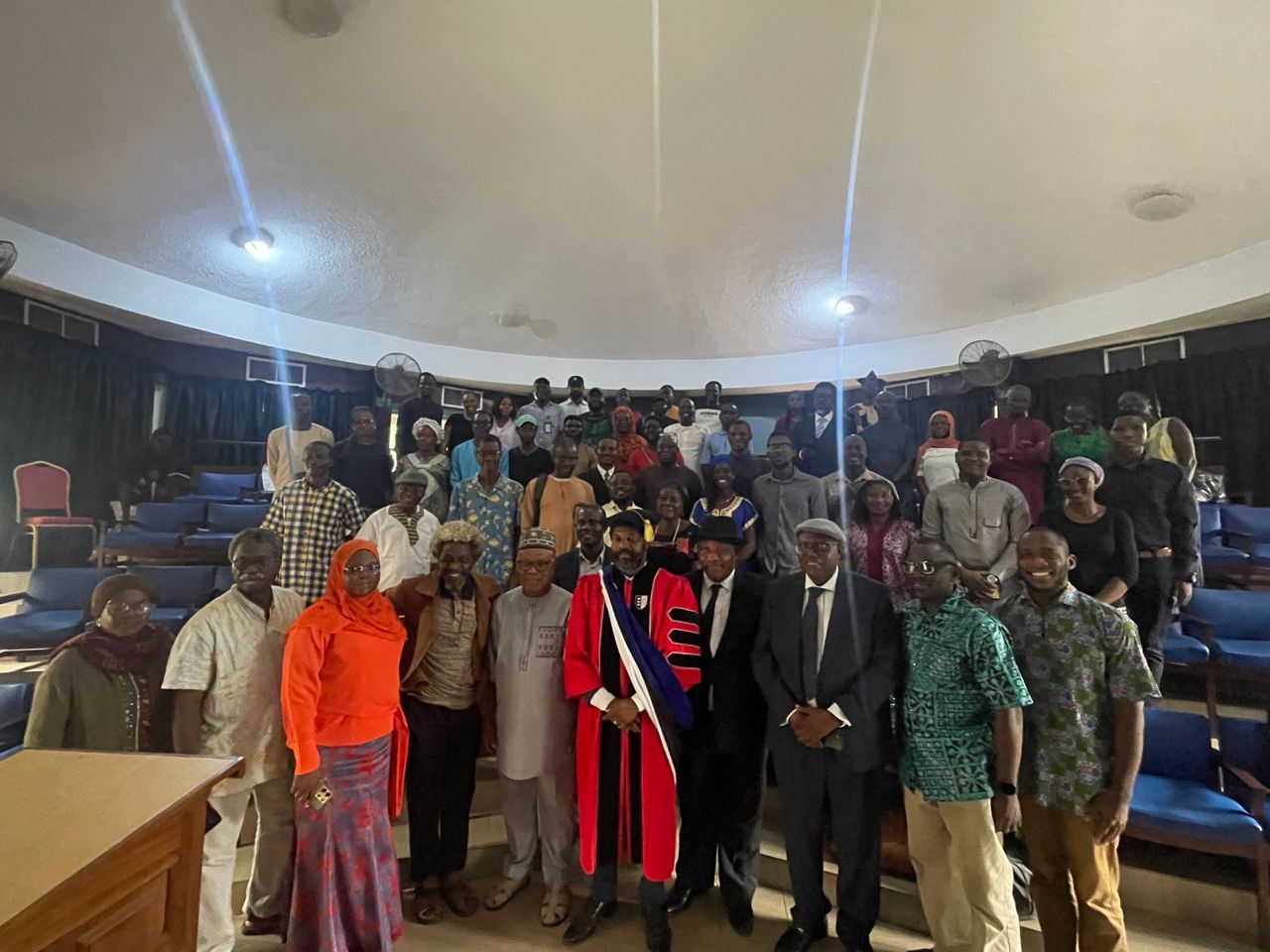
The guest lecture was well-attended by academics and scholars from within the institute and from the broader university community. Members of IAS faculty in attendance included the director of the Institute of African Studies, Professor Sola Olorunyomi, senior research fellow and head of the Traditional African Medicine and Belief Systems unit, Dr. Obafemi Jegede, visiting professor in African Anthropology, Professor Fausat Ibrahim, senior lecturer in Cultural and Media Studies, Dr. Maria Ekpenyong, the institute’s postgraduate coordinator and Senior Research Fellow in African Music, Dr. Olaolu Adekola, and lecturer in African History, Dr. Oreoluwa Oguntomisin.
Adjunct fellows of the institute in attendance were resident scholar Dr. Tunde Adegbola and PhD candidate in Cultural and Media Studies, Professor Mark Nwagwu.
Other distinguished guests at the event were HOD of the Department of Bioethics and Medical Humanities, University of Ibadan, Professor Christopher Agulanna, Dr. Akin Onigbinde (SAN) of Akin Onigbinde & Co., as well as Dr. Funmi Saliu Imaledo of the Department of Criminology and Security Studies, Dominion University, Ibadan.